
In today’s fast-paced world, mental balance is just as important as physical fitness. Stress from school, work, social media, and daily responsibilities can easily affect our mood and focus. One of the most effective and natural ways to support both body and mind is regular gym exercise. But how exactly does daily gym activity help with mental balance? Let’s explore.
1. Exercise and the Brain: How They Are Connected
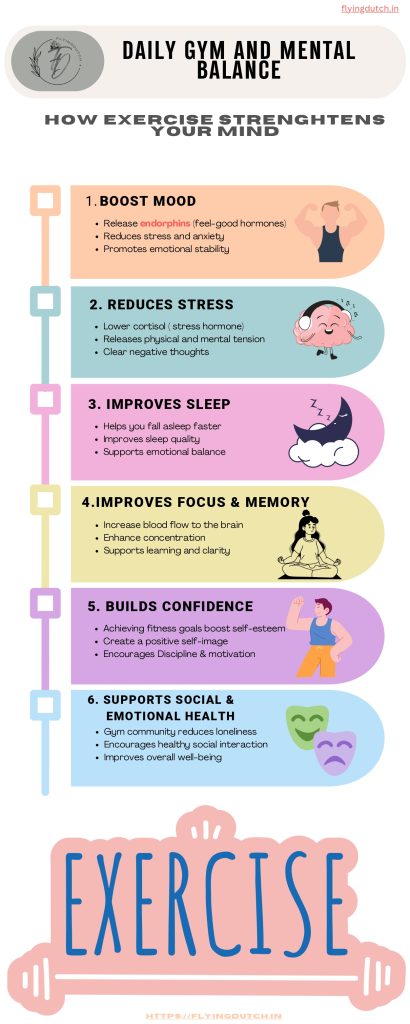
When you work out at the gym, your body releases chemicals called endorphins, often known as “feel-good hormones.” These help improve mood, reduce stress, and create a sense of calm. Regular physical activity also supports better brain function by improving blood flow and oxygen supply to the brain.
Key mental benefits include:
- Reduced stress and anxiety
- Improved focus and concentration
- Better emotional control
2. Daily Gym Routine Helps Reduce Stress
Stress is a common problem for people of all ages. Gym exercises like cardio, strength training, or even light stretching help lower stress hormones such as cortisol. Physical movement allows the mind to take a break from constant worries and negative thoughts.
A balanced daily gym routine can:
- Release built-up tension
- Improve relaxation after workouts
- Help manage everyday pressure in a healthy way
3. Improved Sleep = Better Mental Balance
One major benefit of going to the gym regularly is better sleep quality. Physical activity helps regulate your sleep cycle, making it easier to fall asleep and wake up feeling refreshed. Good sleep plays a huge role in maintaining emotional stability and mental clarity.
Better sleep leads to:
- Improved mood
- Reduced irritability
- Higher energy levels during the day
4. Building Discipline and Confidence
Following a daily gym routine builds self-discipline, which positively affects mental balance. Achieving small fitness goals—like completing a workout or learning a new exercise—boosts self-confidence and motivation.
This sense of progress can:
- Increase self-belief
- Reduce negative self-talk
- Create a more positive mindset
5. Social Interaction and Emotional Health
Gyms are also social spaces. Even simple interactions, such as greeting others or working out together, can reduce feelings of loneliness. Human connection plays an important role in emotional well-being and mental balance.
6. Balance Is More Important Than Intensity
It’s important to remember that daily gym workouts should be balanced, not extreme. Over-exercising can lead to fatigue and mental burnout. Listening to your body, taking rest days when needed, and combining exercise with proper nutrition and hydration is key.